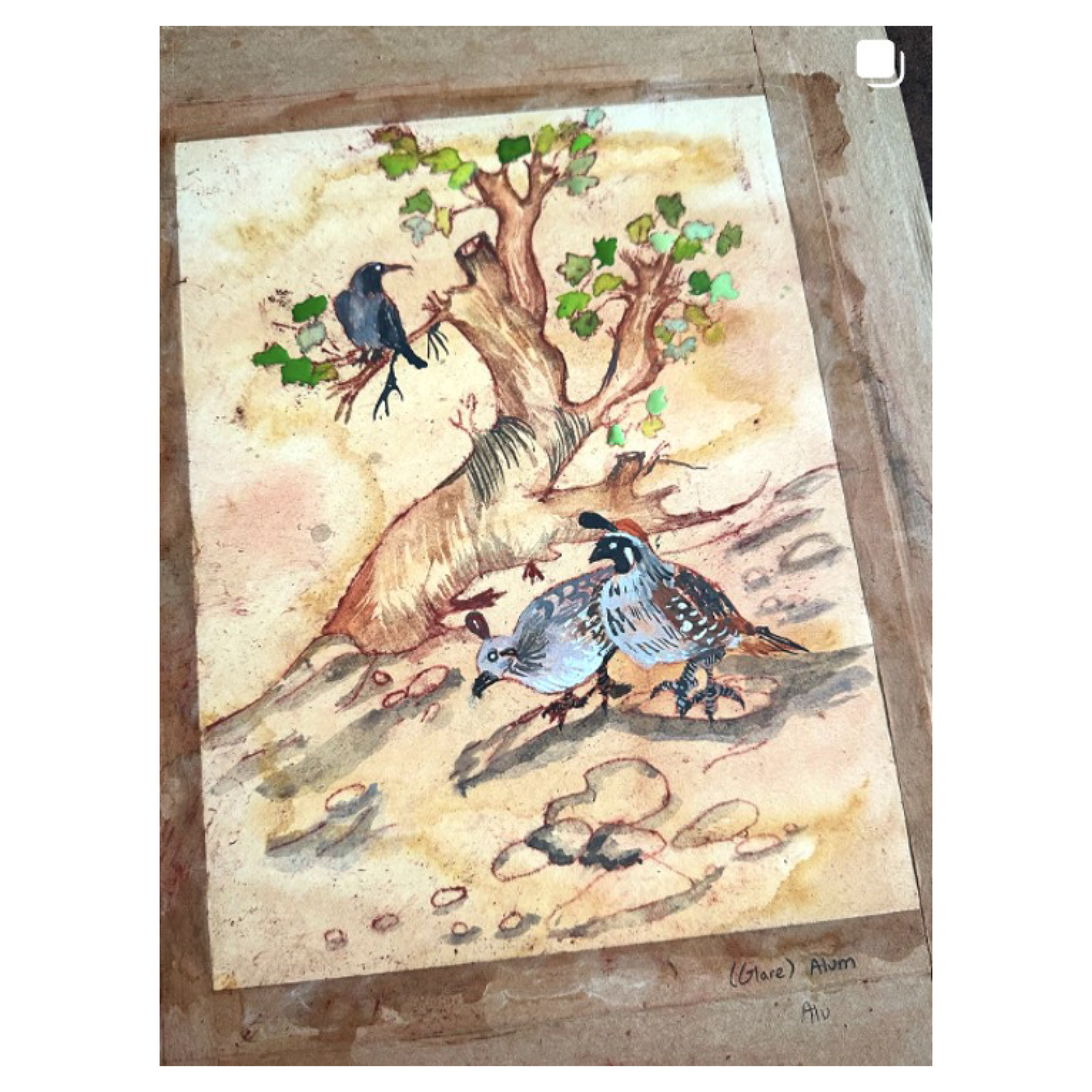
Learning these techniques that take back from 13th century Indo Persian Mughal times in india, I learned how to use black tea to stain the papers and use walnut and sumi ink to create outlines for the papers, goauche white and japanese water colors on Fabriano paper to recreate the works Iranian or Persian painters and artists made during a time where the Islamic period had commenced in parts of Mughal india, sharing its work with botanical flowers, animalia, and landscapes almost cartoon likely made. The quail was used prominently in the minam sirat where they were considered holiest food to eat during that time period.
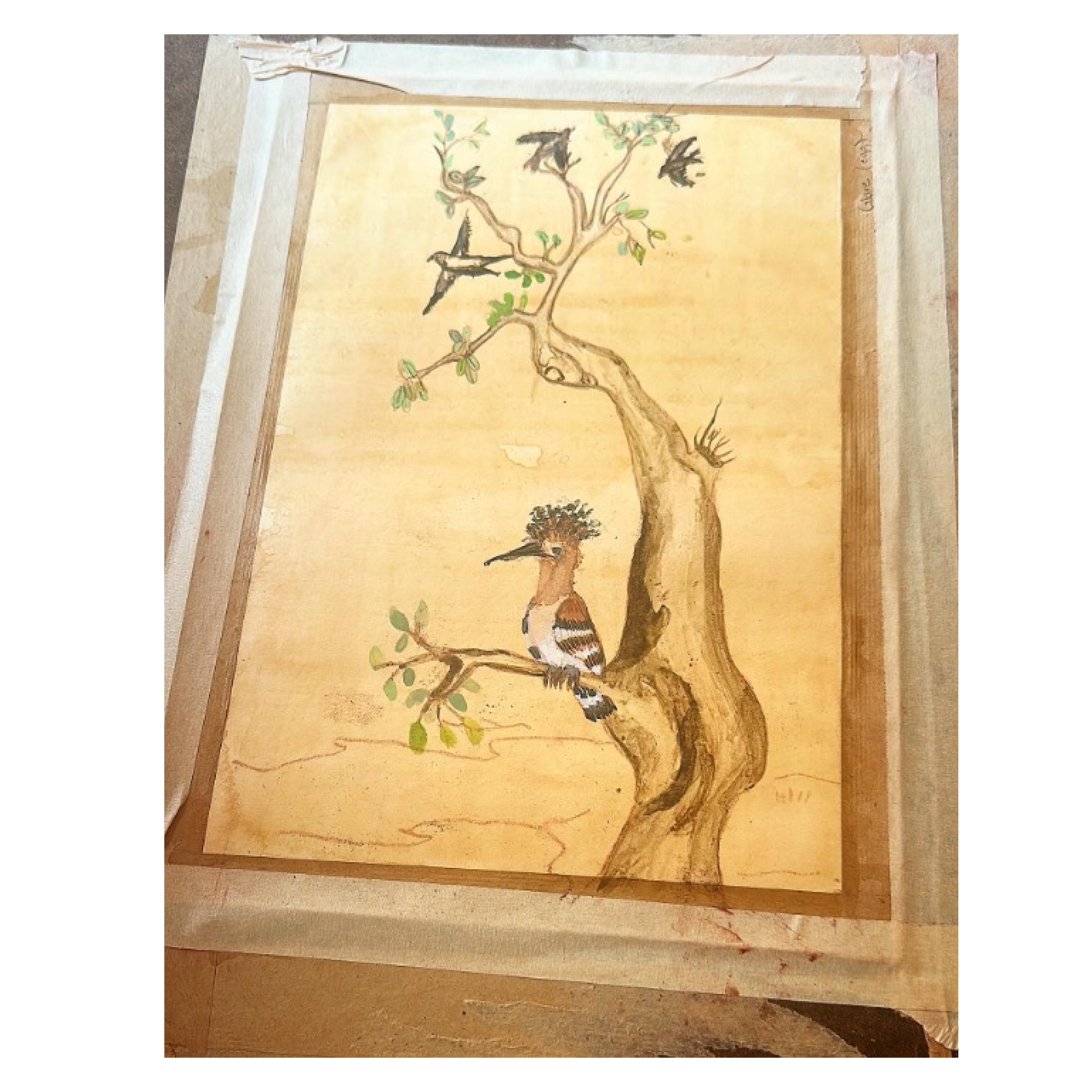
The hoopoe with the frisky feathery hairs was known to migrate from parts of Africa to India where they were known to be painted during that time period, and here these were works that were inspired and made in my Indo Persian class outside of graphic design for its delicate works and layering.
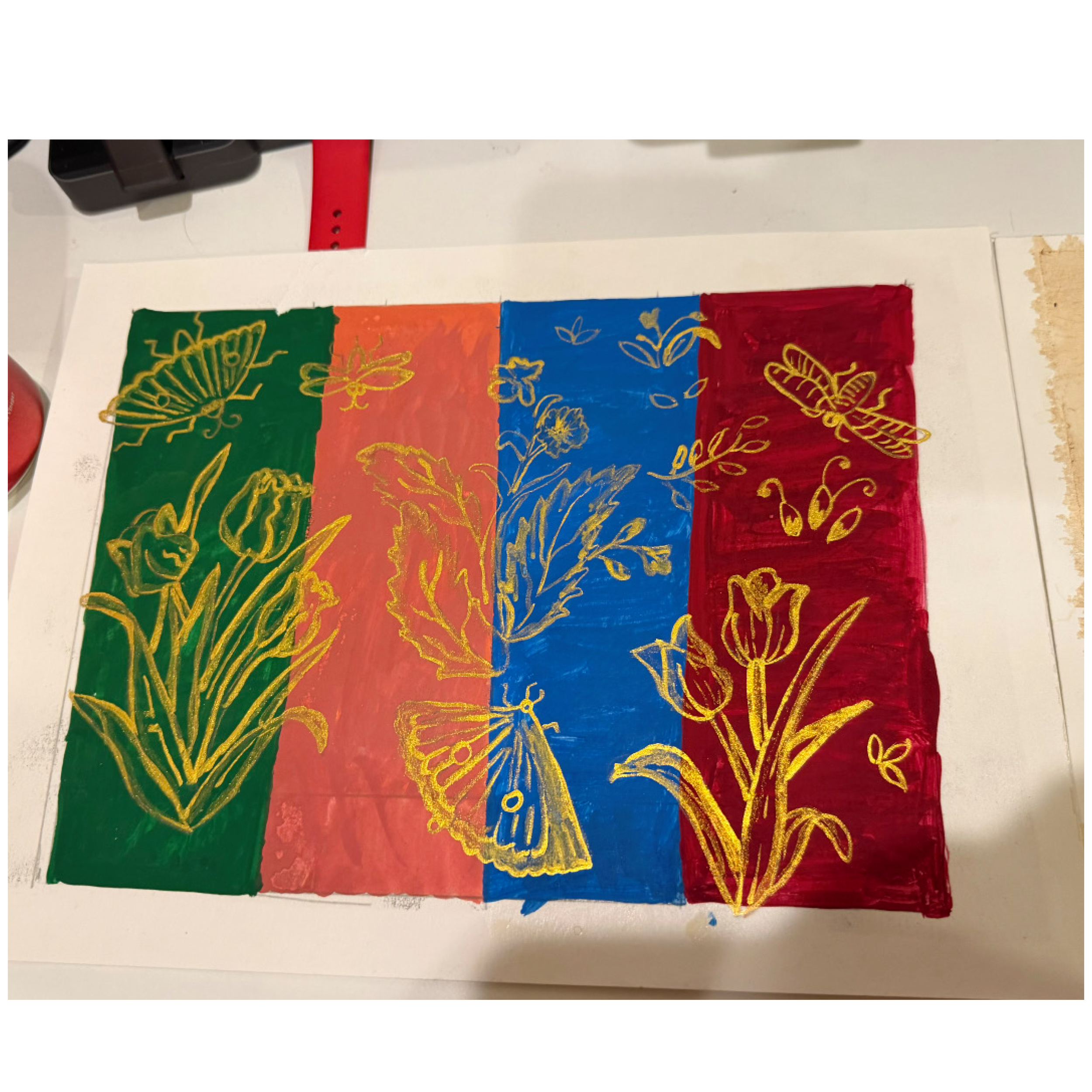
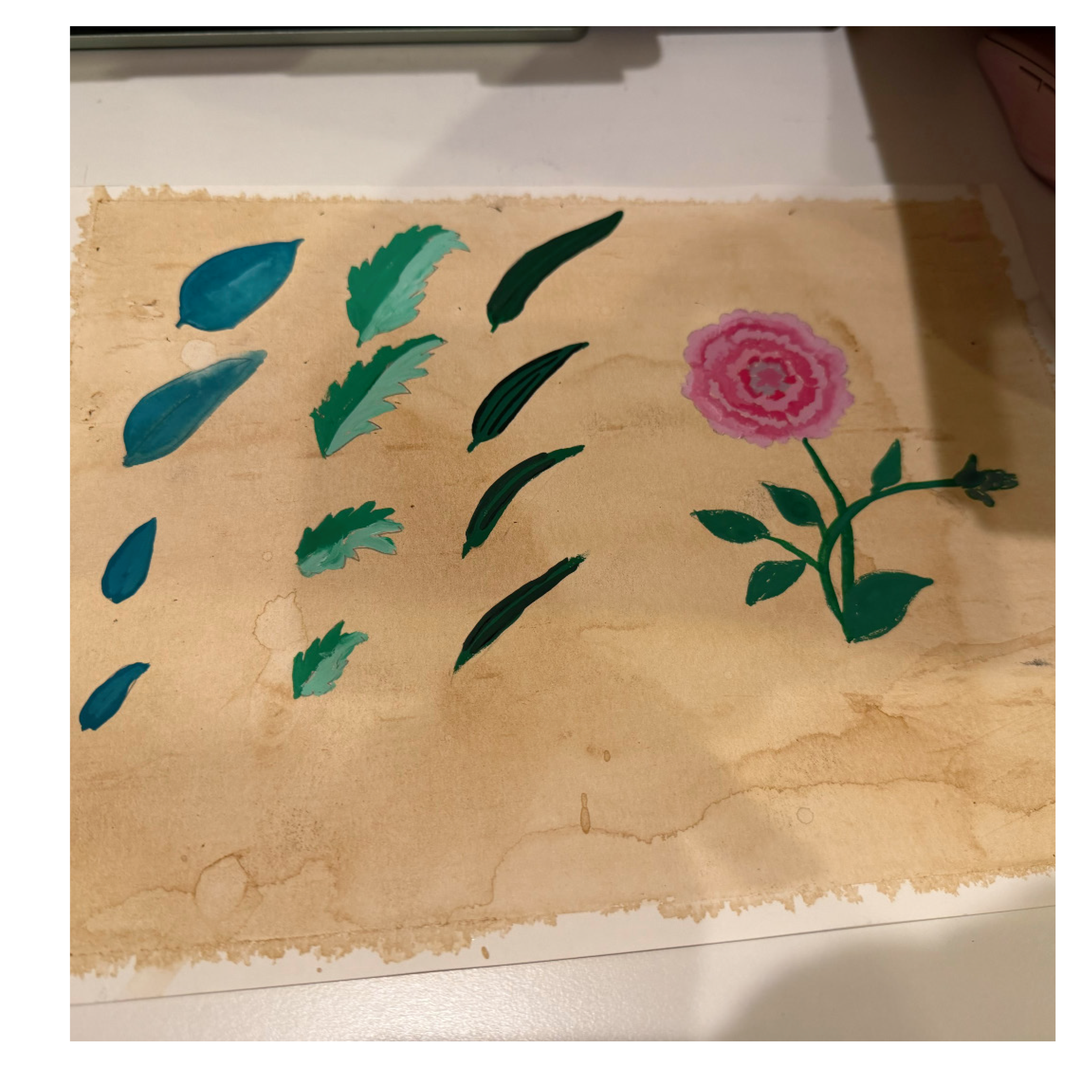
The lower parts considering the botanical flowers techniques are called Halkari and Tarama where Halkari is adorned and embellished in gold watercolor over a colorful background using goauche paint over a high GSM paper where they were adorned as frameworks alongside portraitures of Mughal Kings and queens. Tarama is another technique using watercoloring or color to paint realistic colors of botanical art used and found in Mughal India encased surrounding as a framework within a portraiture instead of gold covered in black tea stained paper as the background to give a sepia background.